How to Do Keyword Research (Step-by-Step Guide for Beginners)

Table of Contents

Introduction

If your website is not getting traffic, the problem is often not your content… it is your direction. Many beginners start writing blogs without knowing what people are actually searching for. This is where keyword research becomes important. It helps you understand what your audience wants, what they are searching, and how you can create content that actually brings traffic. In this simple guide, I will walk you through a step-by-step process that works in real life. No complicated terms. Just practical steps you can follow.

Keyword Research

What is Keyword Research?

Keyword research is the process of finding the words and phrases that people type into search engines like Google.
These search terms help you understand:
What your audience is looking for
What type of content you should create
How to bring the right visitors to your website
It’s not just about getting traffic… it’s about getting the right people.

Why Keyword Research is Important in SEO

Without proper keyword planning, your content becomes guesswork.

Here’s why it matters

  • It helps your website rank on Google
  • It brings targeted visitors
  • It improves conversion chances
  • It saves your time and effort
If you skip this step, even good content may not perform well.

Types of Keywords You Should Know

Understanding keyword types helps you build better strategy.
Keyword Research

Short-Tail Keywords

These are broad and highly competitive terms.
Example: SEO, marketing

Long-Tail Keywords

These are more specific and easier to rank. Example: how to find low competition keywords

Informational Keywords

Users are looking to learn something.Example: what is keyword research

Transactional Keywords

Users are ready to take action. Example: hire SEO expert

Step-by-Step Guide to Keyword Research

Now let’s understand the real process.

Understand Your Niche

Before finding keywords, you need clarity. Think about: Who is your audience What problems they face What solutions you offer This step builds the base of your strategy.

Start with Seed Keywords

Seed keywords are basic terms related to your niche. For example: SEO services digital marketing website ranking These help you generate more keyword ideas.

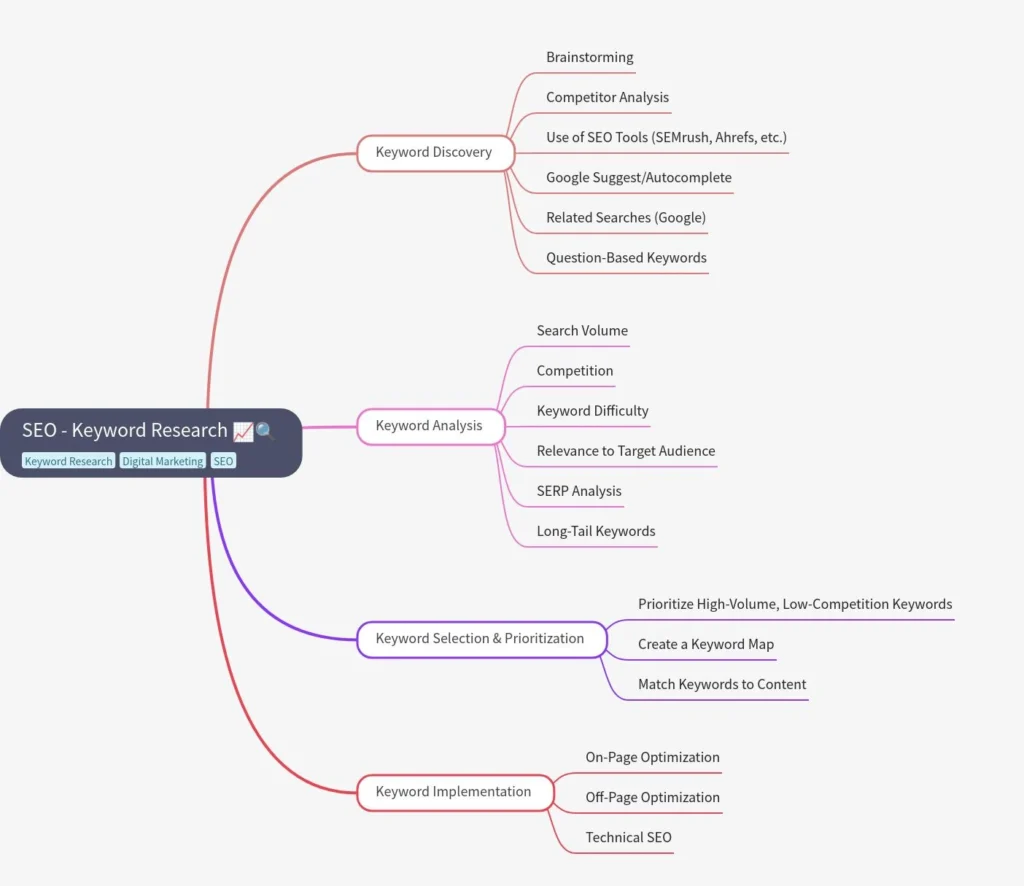
Use Keyword Research Tools

You don’t need expensive tools in the beginning. You can use: Google search suggestions Google Keyword Planner Ubersuggest Ahrefs (if available) These tools help you find search volume, competition, and keyword ideas.
Keyword Research

Analyze Search Intent

This is one of the most important steps. You need to understand why someone is searching.

Types of Search Intent

Informational (learning something) Navigational (finding a website) Transactional (ready to buy or act) If your content does not match intent, it will not rank.

Find Long-Tail Opportunities

Instead of targeting broad keywords, focus on specific phrases.
For example:
Instead of “SEO”
Use: “how to do keyword research for beginners”
These keywords are easier to rank and bring better results.

Check Competition Level

Not every keyword is worth targeting.
Look for:
Low competition
Medium search volume
High intent
If your website is new, avoid highly competitive terms.

Create Keyword Clusters

Instead of focusing on one keyword, group related keywords together.
Keyword Research

Example Keyword Cluster

keyword research
how to find keywords
SEO keyword analysis
keyword strategy for beginners
search intent keywords
This helps you build strong topical authority.

How to Use Keywords in Your Content

Finding keywords is not enough… using them properly is important.

Where to place keywords

In the Title (H1)
In headings (H2, H3)
In the first paragraph
In meta description
In URL
Naturally inside content
Avoid overusing keywords. Keep it natural and readable.

Common Keyword Research Mistakes

Even small mistakes can affect your results.

Ignoring Search Intent

High-volume keywords won’t work if intent is wrong.

Choosing Only High Volume Keywords

These are usually too competitive.

Not Using Related Keywords

Using related terms helps search engines understand your content better.

Copying Competitors Blindly

Always analyze and improve instead of copying.

Best Practices for Beginners

If you are just starting, keep it simple.
Focus on solving user problems
Use easy and clear language
Target long-tail keywords
Build content using keyword clusters
Stay consistent
SEO takes time, but it works when done correctly.

Conclusion

Keyword research is the foundation of SEO. When you do it correctly, everything becomes easier: content creation, ranking, and traffic.
Start simple and improve step by step. You don’t need to be perfect. You just need the right direction.

Need Help with Keyword Research?

If you are struggling to find the right keywords or your website is not getting traffic, we can help you.
At GlowGrowSEO, we create data-driven keyword strategies that bring real results  not just traffic, but conversions.
Book your consultation today with GlowGrowSEO and start growing your website the right way.

Scroll to Top